

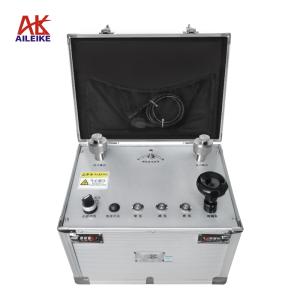
Operational Guide to the Precise Calibration and Comprehensive Testing of Pressure Switches
Pressure switches are core protective components in industrial pressure-bearing automatic control systems; their set points, reset accuracy and contact make/break performance all affect the operational stability of equipment, necessitating regular calibration and testing. This calibration utilised the ALKT702 pneumatic calibration bench and the ALKC400A digital pressure calibrator, operating under standard conditions of (20±2) °C and relative humidity ≤85% RH. Following standardised piping and electrical connection procedures, performance tests were carried out in both normally open and normally closed modes to precisely calibrate the actuation and reset pressures and verify the sensitivity of the contact switching. Pressure regulation, readings and pressure relief operations were carried out in accordance with regulations throughout the process to ensure the accuracy and reliability of the test data, comprehensively verifying the operational performance of the equipment and confirming compliance with industrial metrology and on-site production standards.
I. Tools for Calibrating Pressure Switches
|
Name |
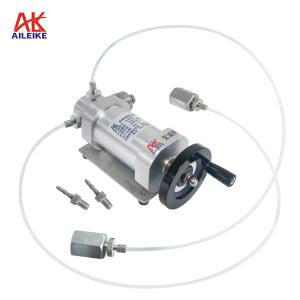
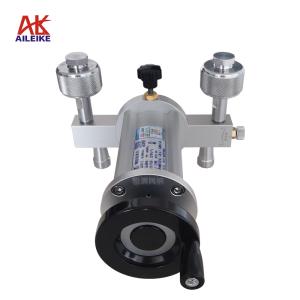
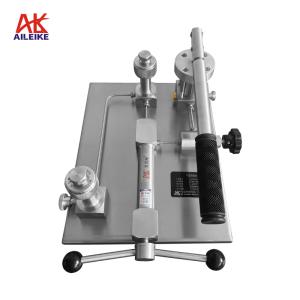
Air Pressure Calibration Bench |
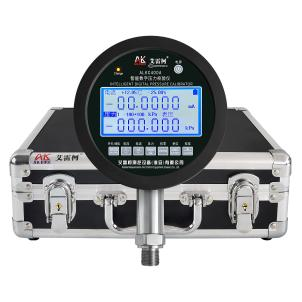
Digital Pressure Calibrator |
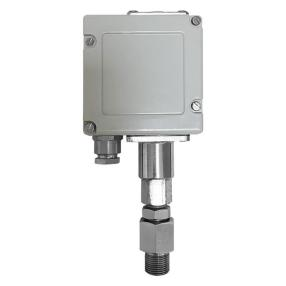
Pressure switch |
|
Model |
ALKT702 |
ALKC400A |
Various models |
|
Technical Specifications |
Pressurisation method: Manual Pressure range: 0–6 MPa Medium: Clean air Outlets: 2 Connection: M20×1.5(F) Net weight: 10 kg Product dimensions: 400×320×185 mm |
Pressure: 0–6 MPa Accuracy: 0.02% FS Temperature compensation: With temperature compensation Current measurement: ±25.0000 mA Voltage measurement: ±50.0000 V DC output: 24 V DC Communication interface: RS-232/RS-485 Power supply: Built-in rechargeable battery Connection: M20×1.5 (M) Net weight: 1 kg Dimensions: 156 × 47 × 239 mm
|
Pressure switch: 0–6 MPa Set point: 2 MPa Contact type: Normally open/normally closed switch Wetted parts material: Stainless steel Mounting connection: M20×1.5 (default)
|
|
Product Dimensions |
|
|
|
The entire verification process must be carried out in strict accordance with current metrological technical specifications. The main references include:JJG 544-2011 ‘Pressure Controllers’, which applies to the initial verification, subsequent verification and in-service inspection of pressure, vacuum and pressure-vacuum controllers (including mechanical and electronic types); these are pressure control devices that operate without an external power supply and rely on pressure changes to directly drive mechanical components to close or open contacts.
II. Detailed Explanation of the Operational Process
(1) Preliminary Preparations
1. Environmental Requirements
The temperature must be maintained at (20±2) °C, with relative humidity ≤85% RH and no condensation. Ensure that the site is free from vibration, dust and corrosive gases.
2. Connecting the Equipment
• Connect the pressure switch and the ALKC400A digital pressure calibrator to the outlet of the ALKT702 pneumatic calibration bench using a sealed connection. Press the Switch/Peak button on the ALKC400A to switch to pressure switch measurement mode.
• Pressure switch pre-adjustment: Open the protective cover of the adjustment knob on top of the pressure switch, have the adjustment tool ready, and allow sufficient travel for clockwise (increase) and anti-clockwise (decrease) rotation to set the pressure switch setpoint.
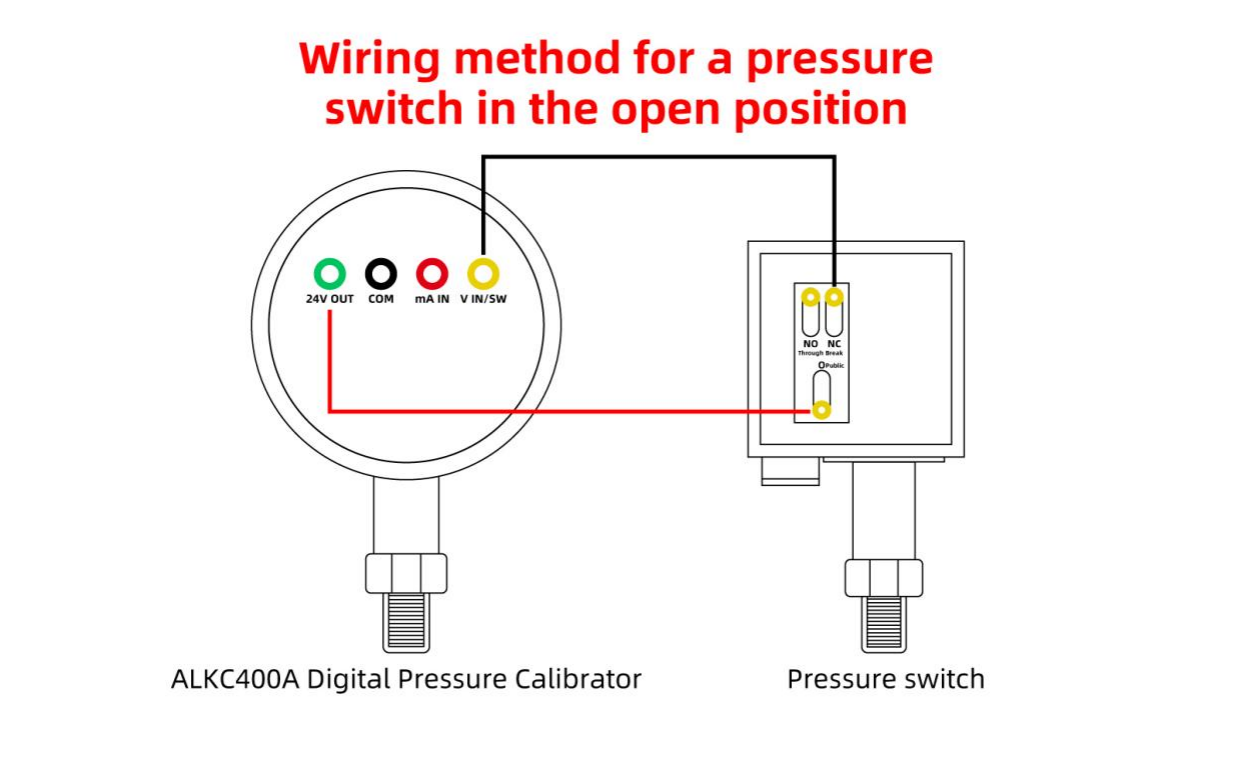
• Wiring instructions:
(1) Connect the red test lead of the ALKC400A to the 24V output terminal of the standard meter, and the black test lead to the measurement terminal of the pressure switch.
(2) Clip the red crocodile clip to the common terminal (COM) of the pressure switch, and the black crocodile clip to the normally open (NC) or normally closed (NO) terminal.
(3) Now, first clip the black crocodile clip to the normally open (NC) terminal. At this point, the ALKC400A pressure switch on the standard meter will display the word ‘Open’, confirming that the pressure switch is in the normal open (disconnected) state and that the wiring is correct.
(2) Operating Procedure
Key calibration steps: Set the target pressure to 2 MPa. Turn the pressure switch adjustment knob slightly (clockwise to increase pressure, anti-clockwise to decrease pressure), whilst applying pressure using the calibration bench to fine-tune the pressure switch’s actuation point precisely to the target pressure of 2 MPa. Once calibration is complete, lock the knob in position.
1. Testing the closing and opening of the pressure switch in the normally open state
• First, turn the fine-adjustment knob on the ALKT702 anti-clockwise until it can no longer be turned, then close the vent valve.
• Apply pressure using the lever until the pressure reaches approximately the calibration value, then use the fine-adjustment knob to turn clockwise to set the required upper threshold (actuation pressure) for closing the switch to 2 MPa. You will hear a ‘beep’ from the instrument, the contact status will change, and the switch status on the standard gauge interface will change from ‘open’ to ‘closed’. The pressure switch will switch from the open state to the closed state; record the actuation pressure value.
• Continue to reduce the pressure using the fine-adjustment knob by turning it anti-clockwise until the pressure reaches the lower cut-off value (reset value) of 1.7 MPa. You will again hear a ‘beep’ from the instrument, the contact status will change, and the test indicator on the standard gauge will change from ‘closed’ to ‘open’. The pressure switch will switch from the closed state to the open state; record the reset pressure value.
• Once the test is complete, open the vent valve to gradually release the pressure in the pipeline until it reaches 0; the measurement is then complete.
2. Testing the closing and opening of a pressure switch in the normally closed state
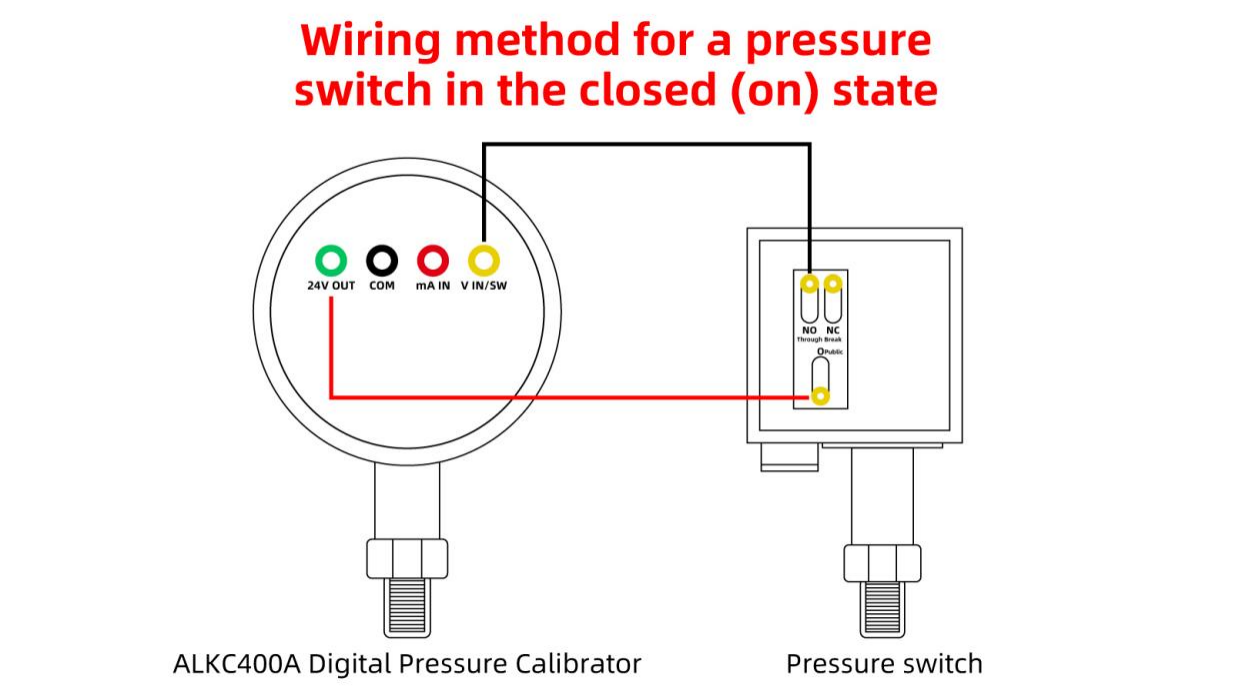
• First, clip the black alligator clip onto the normally open (NO) terminal; you will then see that the pressure switch is in the normally open state, and the ALKC400A standard pressure switch tester will display the word ‘Open’.
• Turn the fine-adjustment knob anti-clockwise until it stops, then close the relief valve.
• Use the lever to apply pressure, stopping when the pressure reaches approximately the calibration value. Then use the fine-tuning knob to turn clockwise until the required upper threshold (actuation pressure) of 2 MPa is reached for the switch to close. You will hear a ‘beep’ from the instrument, the contact status will change, and the switch test on the standard gauge interface will change from ‘Open’ to ‘Closed’. The pressure switch will switch from the closed state to the open state; record the actuation pressure value.
• Continue to reduce the pressure using the fine-adjustment knob in an anti-clockwise direction until the lower cut-off value (reset value) of 1.7 MPa is reached. You will again hear a ‘beep’ from the instrument, the contact status will change, the test indicator on the standard gauge will change from ‘open’ to ‘closed’, and the pressure switch will switch from the open state to the closed state. Record the reset pressure value.
• Once the test is complete, open the vent valve and gradually release the pressure in the pipeline until it reaches 0; the measurement is then complete.
III. Precautions
Proper Use
• Operations must be carried out in accordance with standard procedures. Pressure must be increased and decreased gradually on the ALKT702 pneumatic calibration stand to avoid pressure surges.
• The wiring of the ALKC400A digital pressure calibrator must be clearly identified; take great care to prevent reverse connections.
• Readings at calibration points must be taken only after the value on the standard gauge has stabilised, ensuring that records are accurate and up-to-date.
• Upon completion of the test, first slowly depressurise the system to zero; the instrument under test may only be removed once all residual pressure has been released.
Maintenance and Calibration Intervals
• The ALKC400A digital pressure calibrator must undergo periodic metrological verification (recommended once a year) to ensure measurement accuracy meets standards.
• When the pressure gauge is not in use, the power supply should be switched off; if not used for an extended period, it should be recharged once every three months.
• If the pressure test bench is not to be used for an extended period, it must be depressurised before storage and covered with a cloth cover to prevent dust from entering the instrument.
IV. Conclusion
This pressure switch calibration has completed a detailed inspection and verification of all the equipment’s performance parameters. By conducting pressure on/off tests in both normally open and normally closed modes, the pressure switch’s actuation and reset values were precisely calibrated, and the sensitivity of the contact switching and the accuracy of the pressure hysteresis were comprehensively verified. The calibration procedure adhered to standardised protocols, effectively ensuring the authenticity and accuracy of the test data, and fully verifying the metrological accuracy and operational suitability of this pressure switch. Conducting regular calibration and testing of pressure switches helps to maintain stable equipment control accuracy and effectively ensures the smooth and efficient operation of industrial pressure systems.