

Practical Technical Guidelines for the Calibration, Inspection, and Measurement of Marine Pressure Gauges Using AILEIKE Handheld Hydraulic Pumps
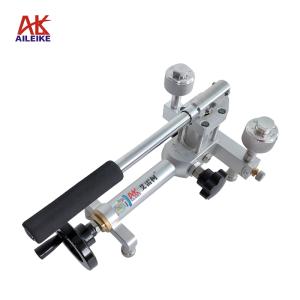
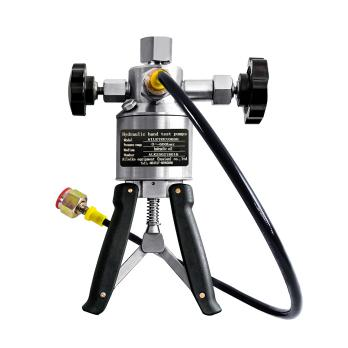
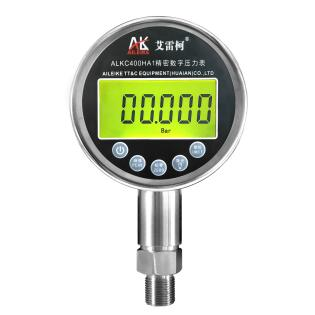
Marine pressure gauges are critical instruments for monitoring pressure in ship propulsion systems; their measurement accuracy directly affects the stable operation of equipment, making regular calibration, inspection, and measurement essential. For this calibration, an AILEIKE106SG handheld hydraulic pump was used as the pressure source, paired with an ALKC400HA1 precision digital pressure gauge, to perform full-range pressure increase and decrease tests at specific points under temperature and humidity conditions that met the requirements. Pressure was applied and released smoothly throughout the operation. Once the pressure stabilized, the dial was tapped lightly to take a reading, ensuring precise measurements at each test point. During the calibration process, the pressure-transmitting medium must be kept clean and operations must be conducted gently. Combined with regular calibration and equipment maintenance, this approach ensures the consistent accuracy of the pressure gauge.
I. Tools for Calibrating Marine Pressure Gauges on Vessels
|
Name |
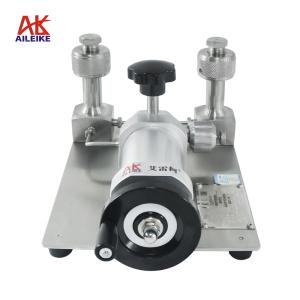
Hand-held Hydraulic Pump |
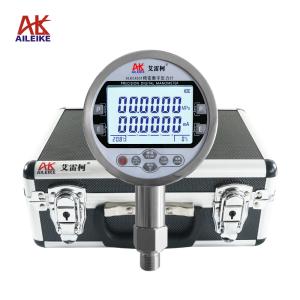
Precision Digital Pressure Gauge |
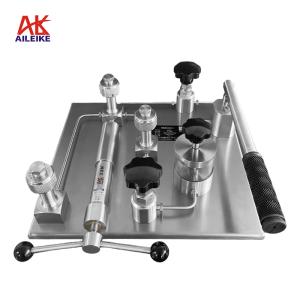
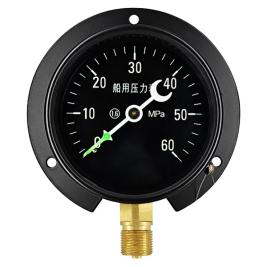
Marine Pressure Gauges |
|
Model |
AILEIKE106SG |
ALKC400HA1 |
Various Models |
|
Technical Specifications |
Pressurization Method: Manual Pressure Range: 0–600 bar Medium: Calibration oil Outlets: 2 Connection: M20×1.5 (F) Net Weight: 2.3 kg Product Dimensions: 260×195×85 mm
|
Pressure: 0–600 bar Accuracy: Class 0.1 Power Supply: Built-in maintenance-free lithium battery Connection: M20×1.5 (M) Net Weight: 0.6 kg Dimensions: 110×50×185 mm
|
Pressure: 0–600 bar Accuracy: Class 1.6 Dial diameter: φ100 mm Connection: M20×1.5 (M) Net weight: 0.3 kg Product dimensions: 125×42×145 mm
|
|
Product Dimensions |
|
|
|
The entire verification process must strictly comply with current metrological technical specifications. The primary references include:JB/T 5527-2005 “Marine Pressure Gauges,” which covers mechanical pointer-type measuring instruments using a Bourdon tube as the measuring element and is applicable to ships and offshore equipment.
II. Detailed Explanation of the Operational Process
(1) Preliminary Preparations
1. Environmental Requirements
The temperature must be maintained at (20±2) °C, with relative humidity ≤ 85% RH and no condensation. The site must be free from vibration, dust and corrosive gases.
2. Fluid Filling Process Using a Hand-Operated Hydraulic Pump
• Prepare the pressure transfer medium (calibration oil) and a funnel.
• First, unscrew the drain knob on the handheld hydraulic pump, then place the funnel over the filling port and pour the medium into the reservoir cup. Fill with a sufficient amount of medium. Once filling is complete, tighten the drain knob.
3. Tool Connection
• Connect the standard gauge ALKC400HA1 to the outlet port of the AILEIKE106SG handheld hydraulic pump.
• Connect the marine pressure gauge to be tested to the “Gauge to Be Tested” outlet of the AILEIKE106SG handheld hydraulic pump.
(2) Marine Pressure Gauge Calibration Process
1. Pressurization Process
• First, loosen the drain knob, adjust the fine-tuning knob outward to the appropriate position, and close the relief valve.
• Hold the AILEIKE106SG pressure-application handle to build pressure. Stop when the pressure reaches approximately the calibration point to be tested, then use the fine-adjustment knob to turn the pressure inward until it reaches 100 bar. Once the pressure has stabilized and the standard gauge reading no longer fluctuates, check the pressure reading on the vessel’s marine pressure gauge under test. Then, gently tap the side of the gauge’s housing with your finger (do not tap the glass or tap forcefully), observe the pointer position, and record the reading once it stabilizes after the tap. Use this post-tap reading as the actual calibration reading for that pressure point, and calculate the error.
• Continue holding the pressure-building handle to increase pressure until it reaches approximately the calibration point to be tested, then use the fine-tuning knob to adjust to 200 bar at the calibration point. Once the pressure stabilizes, tap the marine pressure gauge under test and record the value.
• Use the fine-tuning knob to directly adjust the pressure to the test points of 300 bar, 400 bar, 500 bar, and 600 bar. Once the pressure stabilizes, tap the marine pressure gauge under test and record the reading.
2. Pressure Reduction Process
• Use the fine-tuning knob to reduce the pressure outward until it reaches the test point of 500 bar. Once the pressure stabilizes, tap the marine pressure gauge under test and record the reading.
• Repeat the same procedure to set the pressure to the test points of 400 bar, 300 bar, 200 bar, and 100 bar. Observe the pressure reading on the marine pressure gauge being tested, tap the gauge, and record the reading once it has stabilized after the tap.
3. Pressure Relief Process
Open the relief valve to gradually release the pressure in the pipeline. Once the pressure is reduced to 0, the measurement is complete.
III. Precautions
Proper Use
• During calibration, ensure that the permissible error of the standard gauge is less than that of the gauge under test to ensure accurate and reliable calibration results that comply with metrological standards.
• The pressure-transmitting medium (calibration oil) must be clean and free of impurities to prevent clogging of the piping and damage to the handheld hydraulic pump and pressure gauge.
• Follow standard operating procedures; when using the AILEIKE106SG handheld hydraulic pump, apply and release pressure slowly to avoid pressure surges.
• Apply pressure to the calibration point and record the reading once the standard gauge’s reading has stabilized; for the marine pressure gauge under test, gently tap the case after the pressure has stabilized, and use the reading immediately after tapping as the final reading to ensure accuracy.
• Upon completion of the inspection, slowly relieve the pressure to zero; only after all residual pressure has been released may the instrument under test be removed.
Maintenance and Calibration Schedule
• Perform periodic metrological verification on the ALKC400HA1 precision digital pressure gauge (recommended once a year) to ensure measurement accuracy meets standards.
• When the pressure gauge is not in use, turn off the power. If it will not be used for an extended period, cover it with a cloth cover to prevent dust from entering the instrument.
• When the handheld hydraulic pump is not in use for an extended period, relieve the pressure before storing it. Empty the fluid from the reservoir cup and cover it with a cloth cover to prevent dust from entering the instrument.
IV. Conclusion
The calibration and inspection of marine pressure gauges are critical to ensuring accurate pressure monitoring. By strictly adhering to standard procedures—such as gradually increasing and decreasing pressure in stages and gently tapping the gauge case to take readings—full-range measurements can be conducted to precisely determine the indication deviations at each key pressure point. Throughout the entire process, it is essential to control environmental conditions, maintain the cleanliness of the pressure-transmitting medium, and avoid pressure surges, while also ensuring the regular calibration of standard gauges and the routine maintenance of equipment. Consistently applying standardized measurement procedures and periodic inspection and maintenance ensures that pressure gauges provide reliable data over the long term, thereby continuously supporting the stable operation of a vessel’s pressure systems.
Related News