

The difference between a portable air pressure pump and an air pressure calibration station - taking the AILEIKE ALKB602 and ALKT702 as examples
In the calibration work of pressure instruments, portable air pressure pumps and air pressure calibration stations are two commonly used integrated manual air pressure sources capable of both positive and negative pressures. Both devices have consistent measurement range parameters, operate without hydraulic oil, and utilize clean air as the medium. They can meet the calibration needs of pressure gauges, pressure transmitters, pressure switches, pressure sensors, and other instruments within the range of -0.095 to 6 MPa. Additionally, they are equipped with fine adjustment valves and dual standard output interfaces, ensuring that basic calibration accuracy matches functionality. The difference between the two lies not in performance levels, but rather in their differentiated positioning based on usage scenarios, structural stability, portability, and continuous operation capabilities. They are complementary devices for field calibration and indoor pressure calibration.
1. Commonality between the two models
The two devices share the same parameters and basic functions, supporting free switching from vacuum negative pressure to positive pressure. They feature quick pressure adjustment and smooth pressure rise, making them suitable for routine calibration of industrial instruments. Using air as the medium, they are easy to operate. The universal M20×1.5 quick-screw double interface allows for simultaneous docking with both standard and verified meters, making them suitable for most industrial pressure calibrations.
II. Differences and Usage Advantages
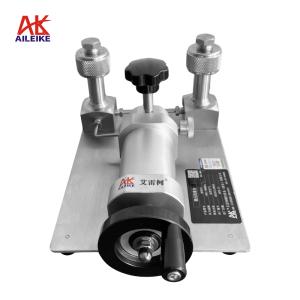
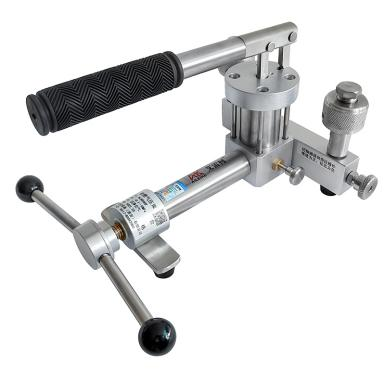
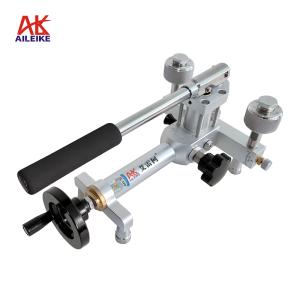
1. ALKB602 portable air pressure pump: convenient for mobile detection
The equipment features a compact structure, weighing approximately 4.2kg and occupying a small volume. It can be directly stored in a toolbox and easily carried by one person, offering strong mobility. The equipment does not require a fixed workbench and is suitable for work scenarios with scattered conditions and limited space. The pressing operation is convenient and quick to learn, making it ideal for intermittent and small-batch on-site verification work.
Application scenarios: On-site inspection in chemical plants, power plants, water plants, ships, and other factory areas; third-party on-site testing; on-site calibration of outdoor equipment; daily instrument pressure testing for multi-point distributed operations without fixed workstations.
Equipment shortcomings: Without a fixed and stable base, the equipment is prone to slight shaking during operation. Its stability during long-term voltage stabilization and continuous verification in large batches is generally average, making it unsuitable for high-precision, long-term continuous verification work in the laboratory.
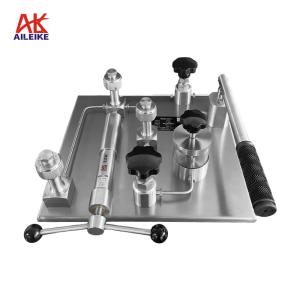
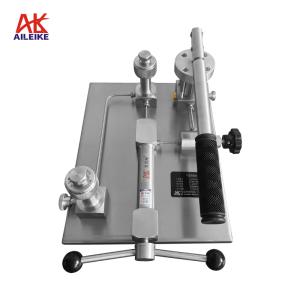
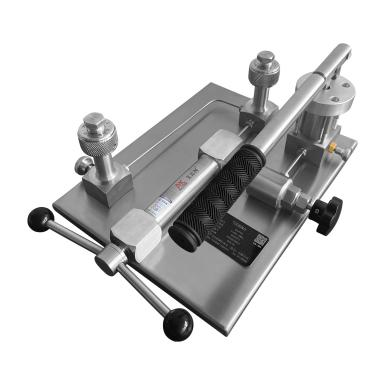
2. ALKT702 Air Pressure Calibration Bench: Stable and Fast Calibration
The equipment is designed with a base, weighing approximately 10kg, ensuring stability and no shaking when placed on a work surface, thus solving the problem of jitter during portable equipment operations. The extended lever pressing structure saves effort in pressure application, significantly reducing the strain during prolonged operations. The equipment's pipelines and valve groups are firmly fixed, resulting in minimal pressure drift, excellent pressure stabilization, and meeting the needs for large-scale pressure instrument verification.
Applicable scenarios: Fixed locations such as enterprise metrology rooms, instrument maintenance workshops, and third-party metrology laboratories; scenarios involving large-scale centralized instrument verification, instrument calibration, long-duration voltage stabilization testing, and continuous operations.
Equipment shortcomings: The volume and weight are relatively large, making it inconvenient to frequently move and transport, and not suitable for outdoor mobile operations.
III. Comparison of parameters between ALKB602 portable air pressure pump and ALKT702 air pressure calibration bench
|
specific parameters |
ALKB602 portable air pressure pump |
ALKT702 Air Pressure Calibration Bench |
|
Total weight |
About 4.2kg, lightweight and easy to carry |
About 10kg, with a stable and self-supporting body |
|
Structural characteristics |
Open and compact structure |
Integrated base, stable and secure |
|
Suppression method |
Short-stroke hand lever, lightweight and portable for short periods |
Extended lever structure, continuously exerting pressure with less effort |
|
Voltage regulation performance |
Meet the on-site short-term verification needs |
Voltage stabilization, precise adaptation, and verification |
|
Usage scenarios |
Outdoor on-site inspection, on-site calibration, and mobile operation and maintenance in the factory area |
Metrology laboratory, centralized watch calibration and adjustment in workshop |
|
picture |
|
|
IV. Selection Suggestions
1. Primarily for field use: The ALKB602 lightweight air pressure pump is the preferred choice, as it is suitable for various on-site mobile calibrations, offering flexibility and efficiency. It meets the needs of daily factory inspections and outdoor equipment testing.
2. Batch operation is preferred: The ALKT702 air pressure calibration bench is the top choice due to its stable structure, excellent pressure stabilization performance, and effortless operation, which enhance the efficiency of batch calibration.
3. Scenario considering both indoor and outdoor use: If the budget is sufficient, two units can be used together, with appropriate division of labor for on-site and indoor operations; if the frequency of outdoor work is extremely low, the desktop model can be directly chosen for operational stability; if outdoor work is normalized, the portable model must be selected.
V. Summary
There is no superiority or inferiority between ALKB602 and ALKT702; they differ only in their customized scenarios. The portable model emphasizes mobility and flexibility, addressing challenges in outdoor and mobile verification tasks. The desktop model focuses on stability, efficiency, and high precision, suitable for indoor standardization and large-scale metrological verification work. By selecting the model based on your specific operational scenario, you can enhance the efficiency and quality of pressure verification work.
Related News