

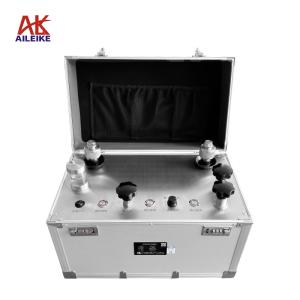
End-to-End Calibration of Pressure Switches: Standardised Operational Procedures Based on the AILEIKE ALKT803 and ALKC400T
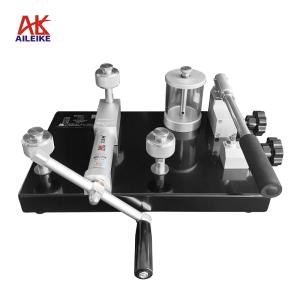
Pressure switches are critical measurement and control components in industrial automation systems; their response and accuracy directly affect production stability. This calibration process utilised the ALKT803 hydraulic calibration bench and the ALKC400T precision digital pressure gauge to establish a standardised calibration procedure. The calibration protocol was strictly followed in a constant temperature and humidity environment: through precise fluid filling and venting, sealed connections and electrical wiring in accordance with specifications, stepwise pressure loading and unloading tests were conducted on the switch’s normally open and normally closed states. The actuation and reset values were captured in real time to verify the hysteresis characteristics and the reliability of the on/off switching. Operations were conducted with meticulous rigour throughout, whilst simultaneously verifying the sensitivity of the equipment and the stability of the contacts, ensuring that measurement errors remained within controllable limits and providing a robust metrological foundation for the precise regulation of industrial pressure control systems.
I. Tools for Calibrating Pressure Switches
|
Name |
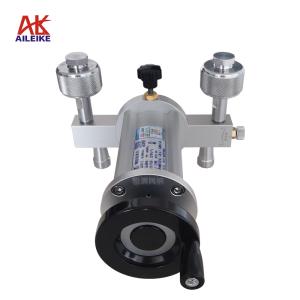
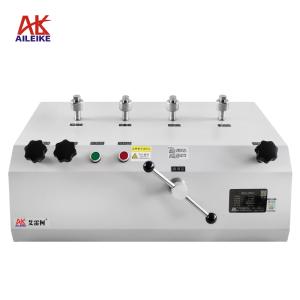
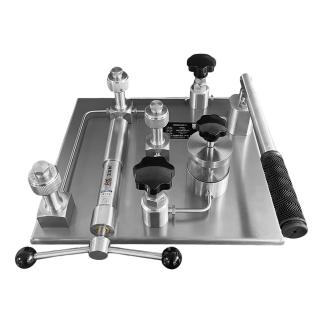
Hydraulic calibration bench |
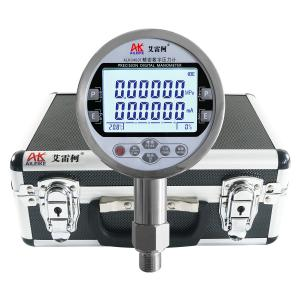
Precision Digital Pressure Gauge |
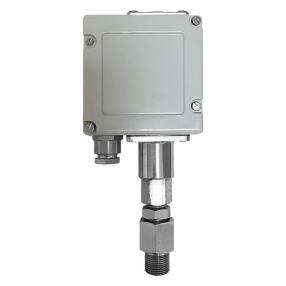
Pressure switch |
|
Model |
ALKT803 |
ALKC400T |
Various models |
|
Technical Specifications
|
Pressurisation method: Manua Pressure range: 0–60 MPa Medium: Purified water or calibration oil Outlets: 3 Connection: M20×1.5 (F) Net weight: 14 kg Product dimensions: 410×410×180 mm |
Pressure: 0–60 MPa Accuracy: 0.05% FS Temperature compensation: With temperature compensation Current measurement: ±30.0000 mA Voltage measurement: ±30.0000 V DC output: 24 V DC Communication interface: RS-232/RS-485 Power supply: Built-in rechargeable battery Net weight: 0.6 kg Connection: M20×1.5 (M) Dimensions: 110×50×185 mm
|
Pressure switch: 0–60 MPa Set point: 30 MPa Contact type: Normally open/normally closed switch Wetted parts material: Stainless steel Mounting thread: M20×1.5 (default)
|
|
Product Dimensions |
|
|
|
The entire verification process must be carried out in strict accordance with current metrological technical specifications. The main references include: JJG 544-2011 ‘Pressure Controllers’, which applies to the initial verification, subsequent verification and in-service inspections of pressure, vacuum and pressure-vacuum controllers (including mechanical and electronic types). These are pressure control devices that operate without an external power supply and rely on pressure changes to directly drive a mechanical mechanism to close or open contacts.
II. Detailed Explanation of the Operational Process
(1) Preliminary Preparations
1. Environmental Requirements
The temperature must be maintained at (20±2) °C, with relative humidity ≤ 85% RH and no condensation. The site must be free from vibration, dust and corrosive gases.
2. Filling, pressurising and testing the hydraulic test bench
• Prepare the pressure transmission medium (purified water or calibration oil).
• First, unscrew the pressure relief valve on the ALKT803 hydraulic calibration bench and fill the reservoir with the medium, ensuring it is filled to at least two-thirds capacity. Once filling is complete, reattach and tighten the pressure relief valve.
• Next, bleed any excess air from the hydraulic test bench. First, unscrew the plugs from the three outlet ports, open the pressure-regulating valve, the relief valve and the overpressure shut-off valve, turn the fine-adjustment valve anti-clockwise until it can be adjusted no further, and then close the relief valve. Next, use the lever to apply pressure, directing the fluid to the three outlet ports.
3. Tool connections
• Connect the pressure switch and the ALKC400T precision digital pressure gauge to the outlet of the ALKT803 hydraulic calibration bench using a sealed connection; secure the other outlet with a plug. Press the ‘Electrical Measurement’ button on the ALKC400T standard gauge to switch to pressure switch measurement mode.
• Pressure switch pre-adjustment: Open the protective cover of the adjustment knob on top of the pressure switch, have the adjustment tool ready, and allow sufficient travel for clockwise (increase) and anti-clockwise (decrease) rotation to set the pressure switch setpoint.
• Wiring instructions:
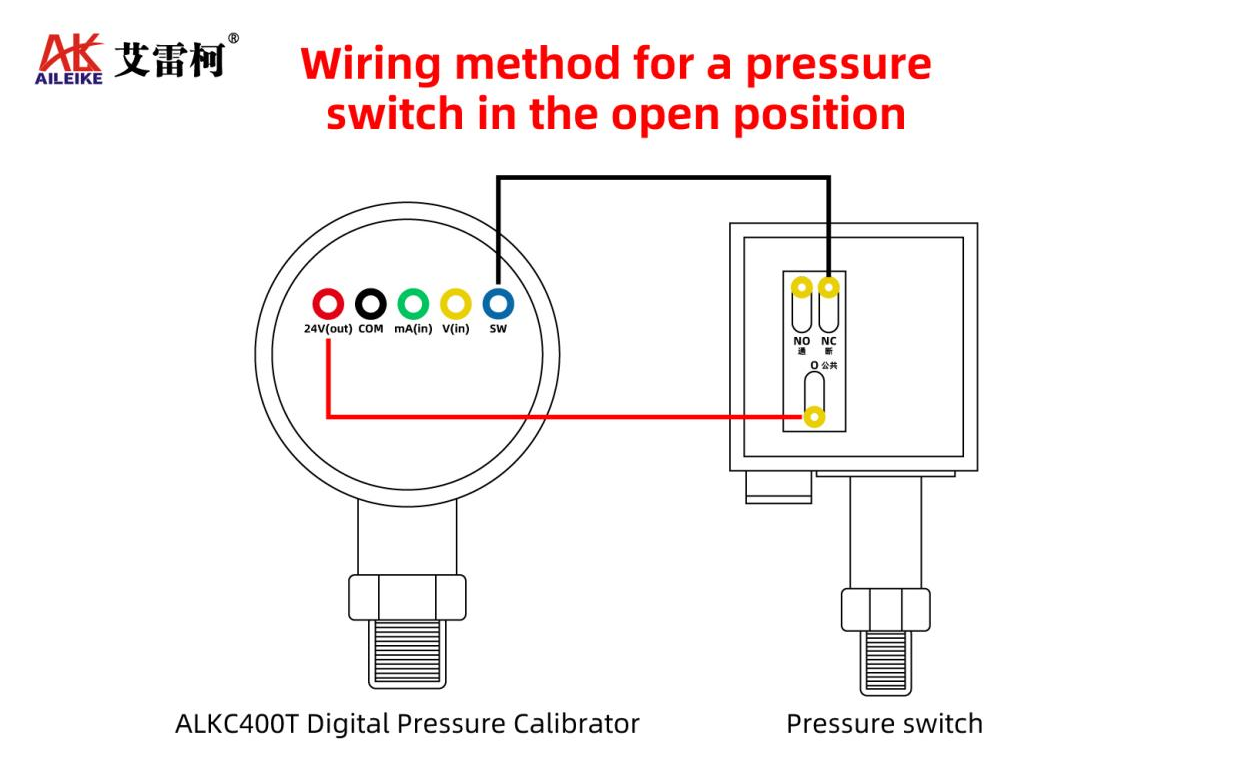
(1) Connect the red test lead of the ALKC400T to the 24V output terminal of the standard gauge, and the black test lead to the pressure switch measurement terminal.
(2) Clip the red crocodile clip to the common terminal (COM) of the pressure switch, and the black crocodile clip to the normally open (NC) or normally closed (NO) terminal.
(3) Now, first clip the black crocodile clip to the normally open (NC) terminal. At this point, the ALKC400T pressure switch display will show the ‘-/-’ symbol, confirming that the pressure switch is in the normal open (disconnected) state and that the wiring is correct.
(2) Procedure
Key calibration procedure: Set the target pressure to 30 MPa. Rotate the pressure switch adjustment knob slightly (clockwise to increase pressure, anti-clockwise to decrease pressure), whilst applying pressure using the calibration bench to fine-tune the pressure switch’s set point precisely to the target pressure of 30 MPa. Once calibration is complete, lock the knob in position.
1. Testing the closing and opening of a pressure switch in the normally open state
• Apply pressure using the ALKT803 lever; stop when the pressure reaches approximately 5–10 MPa. Close the pressure-regulating valve and the overpressure shut-off valve, then use the fine-adjustment knob to turn clockwise until the upper cut-off value (actuation pressure) for closing the contacts is set to 30 MPa. Upon hearing a ‘beep’ from the instrument, the contact status will change and the display on the standard gauge will change from ‘-/-’ to ‘--’ symbol, and the pressure switch switches from the open state to the closed state; record the actuation pressure value.
• Continue using the fine-adjustment knob to reduce the pressure anti-clockwise until it reaches the lower cut-off value (reset value) of 27 MPa. Again, a ‘beep’ will sound from the instrument, the contact status will change, and the display on the standard gauge will change back from ‘--’ to ‘-/-’. The pressure switch will switch from the closed state to the open state; record the reset pressure value.
• Once the test is complete, open the pressure relief valve, pressure-regulating valve and overpressure shut-off valve in sequence to reduce the pressure to 0; the measurement is then complete.
2. Testing the closing and opening of a pressure switch in the normally closed state
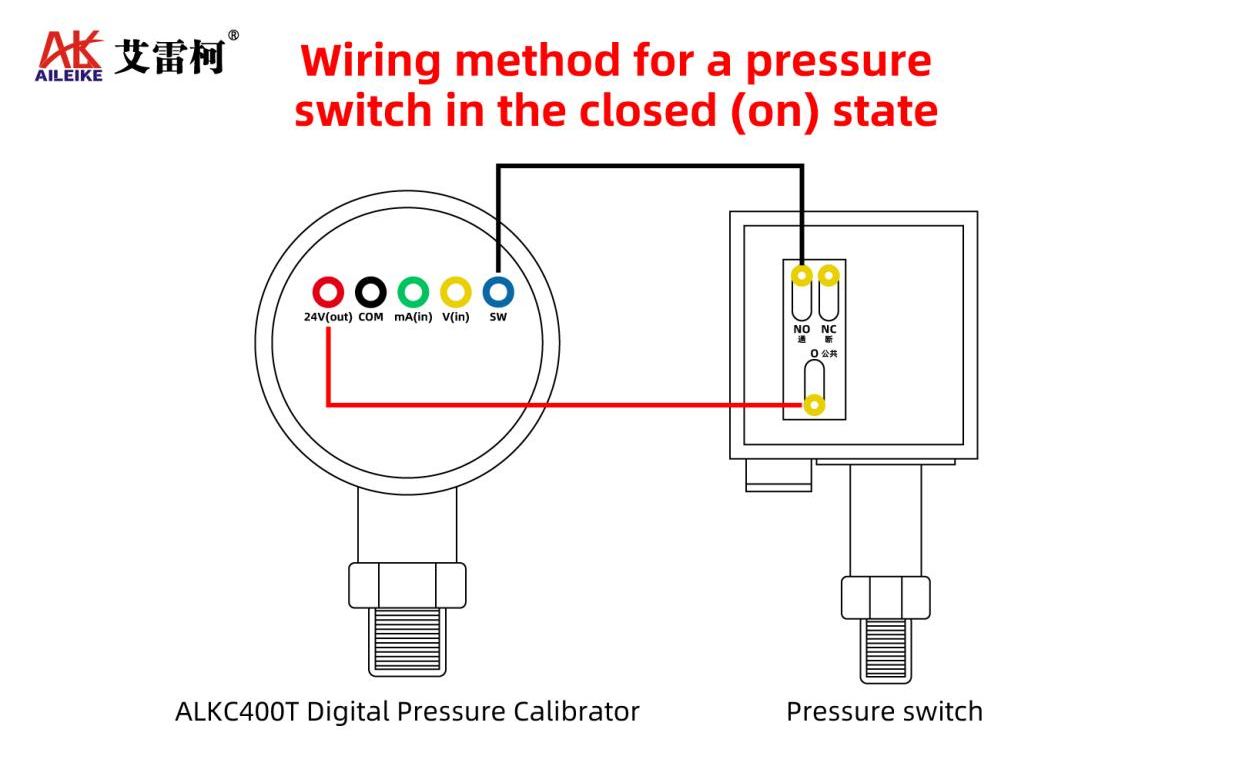
• First, clip the black crocodile clip onto the normally open (NO) terminal; you will then see that the pressure switch is in the normally closed state, with the standard pressure gauge displaying the ‘--’ symbol for a closed position.
• Open the pressure-regulating valve, the relief valve and the overpressure shut-off valve; turn the fine-adjustment valve anti-clockwise until it can no longer be adjusted, then close the relief valve.
• Apply pressure using the lever, stopping at approximately 5–10 MPa. Close the pressure-regulating valve and the overpressure shut-off valve, then use the fine-adjustment valve to turn clockwise to the upper cut-off value (set point) of 30 MPa. You will hear a ‘beep’ from the instrument, and the contact status will change; the display on the standard gauge changes from ‘--’ to ‘-/-’, and the pressure switch switches from the closed to the open state; record the actuation pressure value.
• Continue using the fine-adjustment knob to reduce the pressure anti-clockwise until it reaches the lower cut-off value (reset value) of 27 MPa. You will again hear a ‘beep’ from the instrument, the contact status will change, the standard gauge display will change from ‘-/-’ to ‘--’, and the pressure switch will return from the open state to the closed state. Record the reset pressure value.
• Once the test is complete, open the pressure relief valve, pressure-regulating valve and overpressure shut-off valve in sequence until the pressure is reduced to 0; the measurement is then complete.
III. Points to Note
Guidelines for Use
• The pressure-transmitting medium must be clean and free from impurities to prevent blockages in the pipework and damage to the hydraulic test bench and pressure gauge.
• Operations must be carried out in accordance with standard procedures; when pressurising or depressurising the ALKT803 hydraulic calibration bench, do so gradually to avoid pressure surges.
• The wiring of the ALKC400T precision digital pressure gauge must be clearly identified to strictly prevent reverse connection.
• Readings at calibration points must be taken only after the value on the standard gauge has stabilised, ensuring accurate and real-time recording.
• Upon completion of the test, first slowly relieve the pressure to zero; the instrument under test may only be removed once there is no residual pressure.
Maintenance and Calibration Schedule
• The ALKC400T precision digital pressure gauge should undergo periodic metrological verification (recommended once a year) to ensure that measurement accuracy meets the required standards.
• When the pressure gauge is not in use, the power should be switched off; if it is not used for an extended period, it should be recharged once every three months.
• If the hydraulic test bench is to be stored for an extended period, it must be depressurised before storage; the fluid in the reservoir should be drained, and a cloth cover should be placed over it to prevent dust from entering the instrument.
IV. Conclusion
This calibration strictly adhered to metrological procedures, utilising the ALKT803 hydraulic calibration bench and the ALKC400T precision digital pressure gauge, with the entire process carried out in a constant temperature and humidity environment. Following the precise completion of fluid filling, venting, sealing, and electrical wiring, stepwise pressurisation and depressurisation tests at 30 MPa were conducted in both normally open and normally closed states. The actuation and reset values were recorded in real time to verify hysteresis characteristics and switching reliability. Through standardised procedures and accurate data, potential setting deviations and contact faults were effectively identified, ensuring the equipment met performance standards and providing reliable metrological assurance for the automatic control system.
Related News