English
 Portuguese
  Indonesian
  Russian
  Arabic
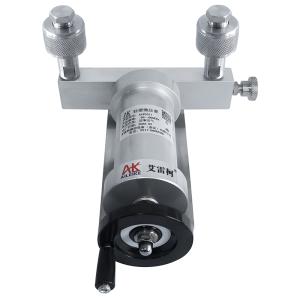
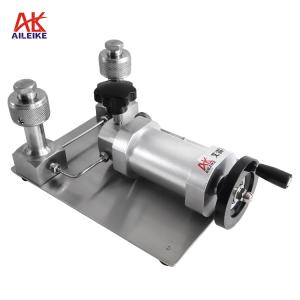
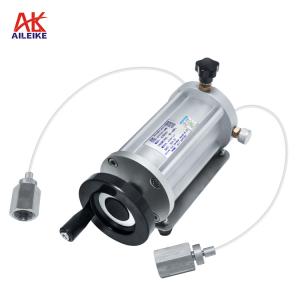
AILEIKE Micro-Pressure Calibration Bench ALKB9651 Technical White Paper
AILEIKE Micro-Pressure Calibration Bench ALKB9651
Technical White Paper
1. Product Overview and Technical Background
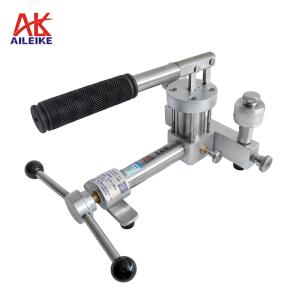
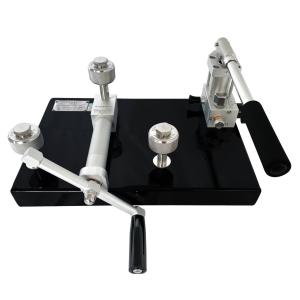
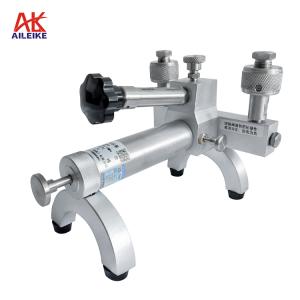
The AILEIKE Micro-Pressure Calibration Bench ALKB9651 is traditionally used in metrology and testing institutions, industrial and mining enterprise laboratories, and research institutes, serving as an auxiliary pressure generation device for the routine calibration and error correction of pressure instruments. When used in conjunction with pressure standards, this product enables the calibration and testing of pressure instruments and is widely applied in metrology, scientific research, and industrial and mining enterprises.
2. Technical Parameters and Performance Specifications
2.1 Basic Technical Parameters
|
Parameter Category |
Technical Specifications |
Notes |
|
Operating Environment |
Laboratory or Field Use |
Suitable for various working environments |
|
Ambient Temperature |
0–50°C |
Wide operating temperature range |
|
Relative Humidity |
<80% |
Moisture-resistant design |
|
Pressure Range |
-90–600 kPa |
Supports both positive and negative pressure requirements |
|
Measured Medium |
Clean air |
Excellent compatibility with various media |
|
Pressure Output |
2 |
Can connect both standard meters and test meters simultaneously |
|
Threaded Connection |
M20×1.5 or as specified by the user |
Flexible interface configuration |
|
Adjustment Precision |
min 1 Pa |
High-precision pressure regulation |
|
Dimensions |
230×240×200 mm |
Compact design |
|
Weight |
2.3 kg |
Easy to carry |
2.2 Key Performance Features
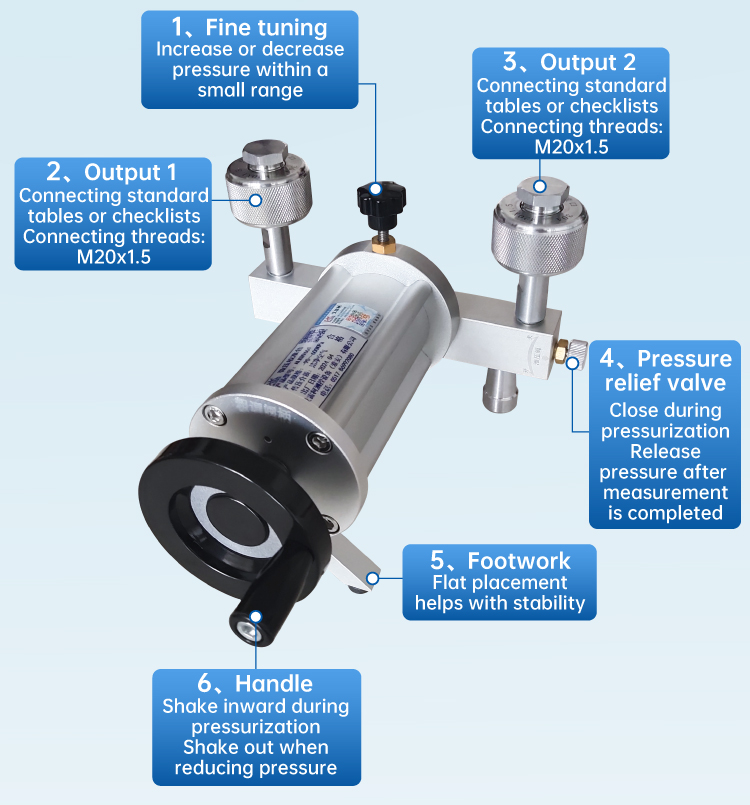
Easy to Operate: Pressure is increased or decreased using a hand-cranked fine-tuning knob. To increase pressure, turn the knob inward; to decrease pressure, turn it outward. Operation is simple and requires minimal effort.
High Accuracy: Adjustment resolution reaches 1 Pa, meeting the requirements for high-precision pressure calibration.
Stable Performance: Pressure increases and decreases smoothly with minimal leakage, ensuring the accuracy and reliability of the calibration process.
Positive and Negative Pressure Calibration: Equipped with both positive and negative pressure calibration functions to meet the calibration needs of various types of pressure instruments.
Portable and Compact: Weighing only 2.3 kg with compact dimensions (230x240x200 mm), it is easy to carry and use on-site.
3. Main Application Areas
The ALKB9651 Micro Pressure Bench is widely used for pressure calibration across multiple sectors:
Industrial Automation: Calibrates pressure transmitters and sensors on production lines to ensure accurate pressure measurement during manufacturing processes.
Petrochemicals: Calibrates various pressure gauges and pressure control equipment in the petroleum and chemical industries to ensure safe production.
Pharmaceutical Industry: Calibrating high-precision pressure measurement equipment during pharmaceutical manufacturing to ensure drug quality meets standards.
Laboratory Research: Providing precise pressure calibration for research institutions to support various pressure-related experimental studies (1).
Metrology and Testing Institutions: Serving as a standard instrument for the verification and calibration of pressure measuring instruments to ensure the accuracy of measurement traceability.
Education and Training: Used in academic institutions and training centers for teaching the principles of pressure measurement and providing hands-on practical training.
In practical applications, the ALKB9651 Micro Pressure Station has demonstrated excellent performance and reliability, capable of meeting pressure calibration needs across various industries and scenarios. Its advantages are particularly evident in situations requiring high-precision, high-stability pressure output.
4. Operation and Maintenance Guide
Operating Procedure
Positive Pressure Testing
Unscrew the plugs on Outputs 1 and 2, turn the handle outward to the maximum open position, and connect the standard gauge and the gauge under test to the output ports (Outputs 1 and 2 are quick-connect fittings; no tools are required. Apply even pressure to tighten them; once the sealing surfaces are in close contact, give them one final turn). Tighten the relief valve. Turn the handwheel clockwise. When the pressure approaches the required value, use the fine-tuning mechanism to adjust it within a small range to the appropriate pressure. Only after the test is complete and the pressure has been released may the test gauge and standard gauge be removed.
Vacuum Testing
First, connect the test meter and the standard meter to the outlet ports. Turn the handle all the way down, tighten the pressure relief valve, and turn the handwheel counterclockwise. When the pressure is close to the required value, stabilize it for 1–2 minutes. Use the fine-tuning function to adjust to the test points, and test sequentially until reaching zero. Only after the test is complete and the pressure has been released may the test meter and standard meter be removed.
Precautions
4.1 Use this instrument within its rated pressure range whenever possible; do not exceed the full-scale range.
4.2 For long-term storage, keep the instrument in a dry environment free of corrosive gases.
4.3 Apply lubricating oil to the instrument’s threaded connections periodically.
4.4 During use, frequently check whether the lower locking screw is securely fastened. If the connection is loose, it may come loose under high pressure.
5. Structural Features
6. Conclusion
As industrial automation continues to advance, the demand for pressure measurement and calibration equipment with higher accuracy, stability, and portability is growing. The ALKB9651 Micro Pressure Bench was developed in response to this market need; it meets the requirements for high-precision pressure calibration and provides reliable pressure measurement solutions for various industries.