English
 Portuguese
  Indonesian
  Russian
  Arabic
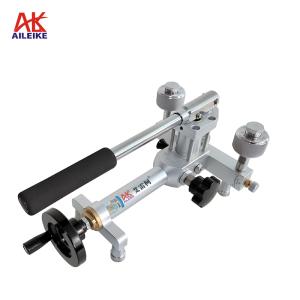
ALKS511 Portable Micro-Pressure Pump Technical White Paper
ALKS511 Portable Micro-Pressure Pump
Technical White Paper
1. Product Overview and Technical Background
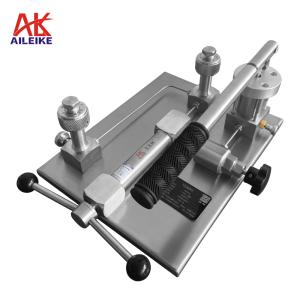
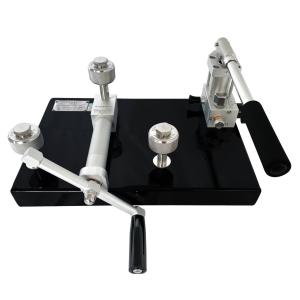
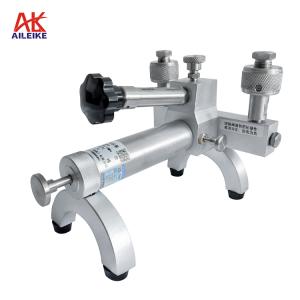
The AILEIKE Portable Micro-Pressure Pump ALKS511 is a precision pressure calibration auxiliary device featuring an open-frame design. Suitable for both fixed laboratory verification and mobile field testing scenarios, it can be used in conjunction with pressure standards to calibrate and verify pressure gauges, pressure transmitters, pressure sensors, pressure switches, or micro-pressure instruments. It offers advantages such as simple operation, smooth pressure ramping, excellent sealing performance, and ease of maintenance. The device requires no external power supply, making it suitable for remote locations without power or complex operating conditions. It provides a reliable solution for low-pressure generation and regulation in industrial production commissioning, laboratory traceability, and on-site equipment maintenance.
2. Technical Specifications and Performance Metrics
2.1 Basic Technical Specifications
|
Parameter Category |
Technical Specifications |
Notes |
|
Operating Environment |
Laboratory or Field Use |
Suitable for various working environments |
|
Ambient Temperature |
-10 to 60°C |
Wide operating temperature range |
|
Relative Humidity |
<80% |
Moisture-resistant design |
|
Pressure Range |
-95 to 600 kPa |
Supports both positive and negative pressure requirements |
|
Measured Medium |
Clean air |
Excellent compatibility with various media |
|
Pressure Output |
2 |
Can connect both standard meters and test meters simultaneously |
|
Threaded Connection |
M20×1.5 or as specified by the user |
Flexible interface configuration |
|
Adjustment Precision |
min 10 Pa |
High-precision pressure regulation |
|
Dimensions |
320×190×140 mm |
Compact design |
|
Weight |
3.3 kg |
Easy to carry |
2.2 Key Performance Features
Regulation Technology: Equipped with a high-precision fine-tuning valve capable of adjustments as fine as 10 Pa, ensuring precise control of pressure values during the calibration process. The valve operates intuitively: turn inward to increase pressure and outward to decrease pressure.
Enhanced Operational Intuitiveness: The open design provides a clear view of the internal components, allowing operators to intuitively understand the device’s operating status and reducing operational complexity.
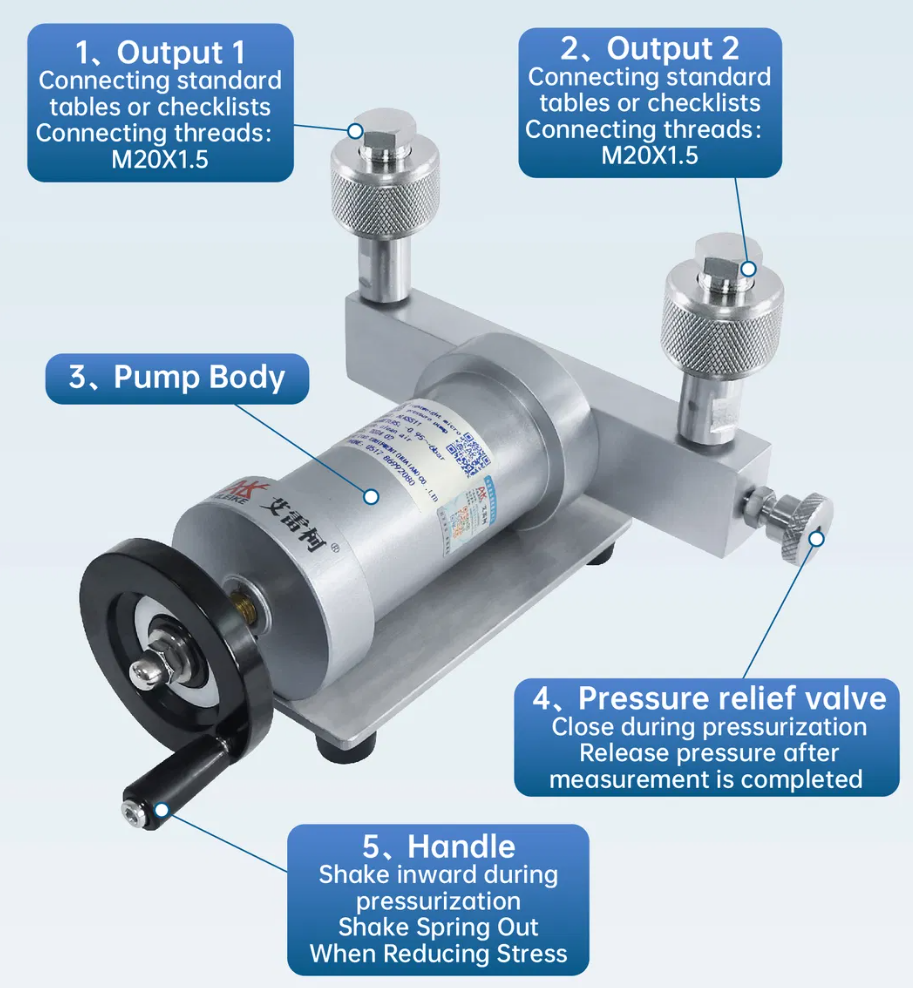
Positive/Negative Pressure Switching Technology: The device generates positive or negative pressure through manual operation of the pressure generation component, allowing for convenient switching between the two modes. During operation, ensure the relief valve is closed to maintain pressure stability; open the relief valve to release pressure after calibration is complete.
Hygiene and Cleanliness: The pressure transmission medium is air, ensuring hygiene and preventing environmental contamination, which also helps improve the accuracy of the calibrated instruments.
Portable and lightweight design: Constructed from high-strength, lightweight materials, the unit weighs only 3.3 kg. Its compact dimensions allow for easy transport by a single person, making it ideal for on-site mobile testing.
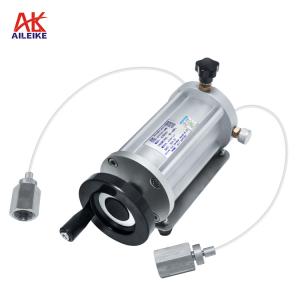
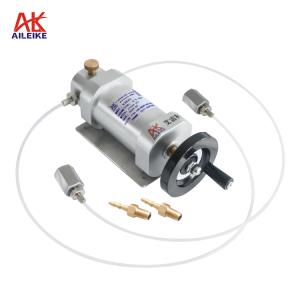
Connection components: Equipped with two standard M20×1.5 quick-connect ports for convenient connection to standard gauges and test instruments. Accessories such as plugs and O-rings are included to ensure connection integrity.
3. Main Application Areas and Analysis
Based on its core advantages of precision and portability, the ALKS511 Low-Pressure Calibration Bench can be widely applied across multiple fields:
Metrology and Testing Institutions: Used for laboratory precision verification of instruments such as pressure gauges and pressure transmitters, in compliance with metrological calibration standards;
Industrial Production Sites: Regular calibration and maintenance of pressure instruments on production lines in industries such as petrochemicals, power generation, and pharmaceuticals;
Laboratory Settings: Simulation and testing of low-pressure environments, providing a stable gas pressure source for research projects;
Instrument Manufacturing Industry: Serves as factory acceptance testing equipment for pressure instruments during production, ensuring product quality;
Research and Education: Used in laboratories at universities and research institutes for research and teaching experiments related to pressure measurement.
3.1 Application Analysis in Industrial Production Scenarios
In the industrial production sector, the ALKS511 lightweight low-pressure pump is primarily used in the following scenarios:
Petrochemical Industry: In petrochemical facilities, pressure instruments are critical equipment for ensuring production safety and product quality. The ALKS511 can be used for on-site calibration of various pressure transmitters, pressure gauges, and pressure switches, particularly for rapid calibration needs in explosion-proof environments. Petrochemical plants require calibration equipment that meets the following criteria: accuracy grade of 0.05% FS, stable operation in high-temperature and high-pressure environments, and explosion-proof certification.
Power Industry Applications: In power systems, pressure monitoring of critical equipment such as boilers and steam turbines is of paramount importance. The ALKS511 can be used for periodic verification of pressure instruments in steam pipelines, pressure vessels, and other equipment to ensure the accuracy of pressure monitoring systems. Key requirements in the power industry include fixed calibration cycles, high accuracy standards, and the ability to withstand over 100,000 fatigue test cycles.
Pharmaceutical Industry Applications: Pharmaceutical companies have extremely strict requirements for cleanliness and pressure control. The ALKS511’s clean air medium design fully complies with GMP standards. The product can be used for cleanroom differential pressure monitoring, process pipeline pressure calibration, and other scenarios to ensure compliance in the drug manufacturing process.
3.2 Application Analysis for Laboratory Testing Scenarios
In the field of laboratory testing, the ALKS511’s value is reflected in the following aspects:
Metrology Laboratories: As supporting equipment for standard instruments, the ALKS511 can be used to establish a pressure traceability system, enabling full-range calibration from reference standards to working instruments. Laboratory requirements for such equipment include high adjustment resolution (10 Pa), excellent stability, and low repeatability error.
Research and Experimental Applications: In scientific research activities such as materials mechanics testing and fluid mechanics experiments, precise control and measurement of minute pressure changes are required. The ALKS511’s 10 Pa resolution meets the demands of such high-precision experiments and is particularly suitable for pressure testing of small samples such as thin films and microchips.
Product R&D Testing: During new product development, performance testing and calibration of products such as pressure sensors and transmitters are required. The ALKS511’s portability and high precision make it an ideal choice for R&D laboratories.
3.3 Analysis of On-Site Maintenance Applications
On-site maintenance represents the application scenario where the ALKS511 offers its greatest advantages, primarily in the following areas:
Operation in environments without power supply: The device’s design, which requires no external power source, makes it particularly suitable for field operations and equipment maintenance in remote areas. In environments without power supply, such as oil fields, mines, and remote field stations, the ALKS511 can independently perform pressure instrument calibration.
Emergency Testing Needs: Rapid and accurate pressure calibration is critical during emergency equipment troubleshooting. The ALKS511’s portability and ease of operation enable it to respond quickly to on-site demands, minimizing equipment downtime.
Mobile Testing Services: For third-party organizations specializing in pressure gauge calibration services, the ALKS511’s compactness and reliability are key to improving service efficiency. A single unit can complete calibration tasks across multiple sites, significantly reducing service costs.
4. Operation and Maintenance Guide
Operating Procedure
Positive Pressure Testing
Open the relief valve and turn the handle outward to the appropriate position. Install the positive pressure standard gauge and the gauge under test on pressure output ports 1 and 2, respectively, then close the relief valve. Turn the handle inward to build pressure to approximately the test point. Allow the pressure to stabilize for 1–2 minutes until the reading on the standard gauge remains steady. Once calibration is complete, open the relief valve. Only after the pressure has been released may the meter under test and the standard meter be removed.
Negative Pressure Testing
Install a negative pressure standard gauge and the meter under test on the two pressure output ports, then turn the handle inward (until it stops turning). Close the relief valve. Slowly turn the handle outward until the pressure reaches approximately the calibration point, then hold steady for 1–2 minutes until the reading on the standard gauge stabilizes. Once calibration is complete, open the pressure relief valve. Only after the pressure has been released may the test meter and standard meter be removed.
Precautions
Place the micro-pressure pump on a flat, easily accessible work surface. Avoid using it in environments containing highly corrosive gases or dust particles.
The outlet fitting is a dedicated quick-connect coupling. When installing the instrument, apply even pressure to tighten it without using any tools. Once the sealing surfaces are in contact, tighten it an additional 1–2 turns.
Pay attention to the seal at the outlet during connection; an improper seal will cause pressure loss.
5. Structure and Function
6.Conclusion
With its open design, precise pressure control, wide pressure range, and outstanding portability and durability, the AILEIKE ALKS511 Compact Micro-Pressure Pump has become the preferred choice in the field of pressure calibration. It not only enhances the efficiency and accuracy of calibration tasks but also delivers significant cost savings by streamlining operation and maintenance procedures, making it an ideal solution for both laboratory and industrial settings.
Related News