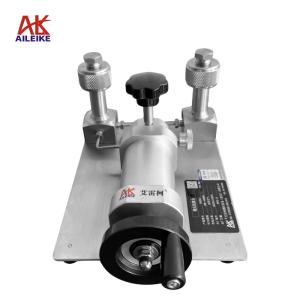


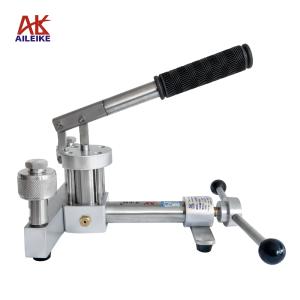
Standard specification and calibration procedure for pressure switch (pressure controller)
The pressure switch (pressure controller) is a crucial device in industrial measurement and control systems. Its set operating value, reset return difference, and contact on-off performance directly affect the stability of equipment operation. Standardized calibration and testing are key to ensuring equipment performance. This calibration utilizes the ALKT700 air pressure calibration bench and ALKC400T precision digital pressure gauge as standard devices. Under specified temperature and humidity conditions, the calibration includes setting the pressure switch, collecting data on the operating point and reset value, and inspecting the contact on-off performance. The operation strictly follows operational specifications, including checking wiring, slowly adjusting pressure, recording data after pressure stabilization, to ensure that the calibration data is authentic and traceable.
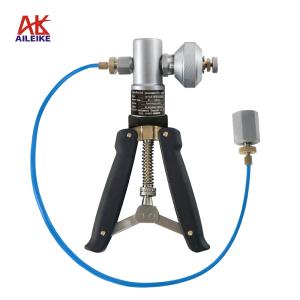
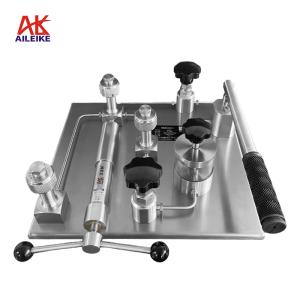
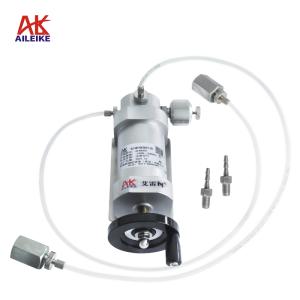
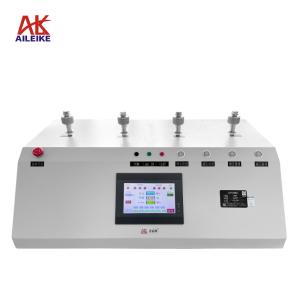
1. Calibration tool for pressure switch
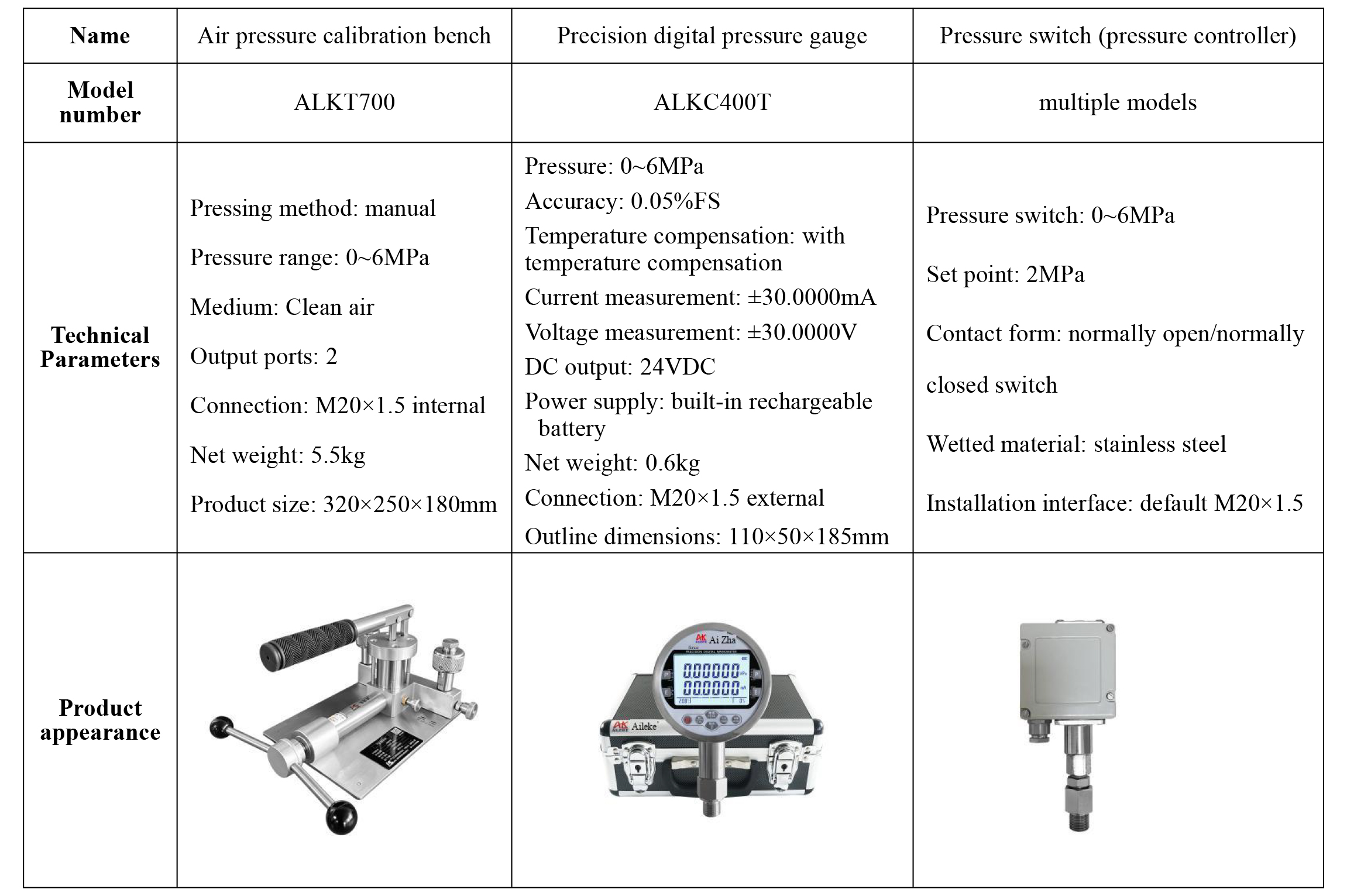
The entire verification process must strictly adhere to the current metrological technical specifications. The main references include: JJG 544-2011 "Pressure Controllers", which is applicable to the initial verification, subsequent verification, and in-service inspection of pressure, vacuum, and pressure-vacuum controllers (including mechanical and electronic types). Pressure control devices that can operate without external power supply rely on pressure changes to directly drive the mechanism to achieve contact making and breaking.
II. Detailed Explanation of Operational Procedures
(I) Preliminary preparations
1. Environmental requirements
The temperature should be controlled at (20±2)℃, with a relative humidity of ≤85%RH, and there should be no condensation. Ensure that the site is free from vibration, dust, and corrosive gases.
2. Tool connection
• Connect the pressure switch and the Precision digital pressure gauge alkc400T to the sealed output port of the air pressure calibration station ALKT700. Press the electrical measurement button on the standard gauge ALKC400T to switch to the pressure switch measurement mode.
• Pressure switch preset: Open the protective cover of the adjustment knob above the pressure switch, prepare the adjustment tool, reserve a rotational adjustment range for clockwise (increase) / counterclockwise (decrease), and set the pressure switch set point.
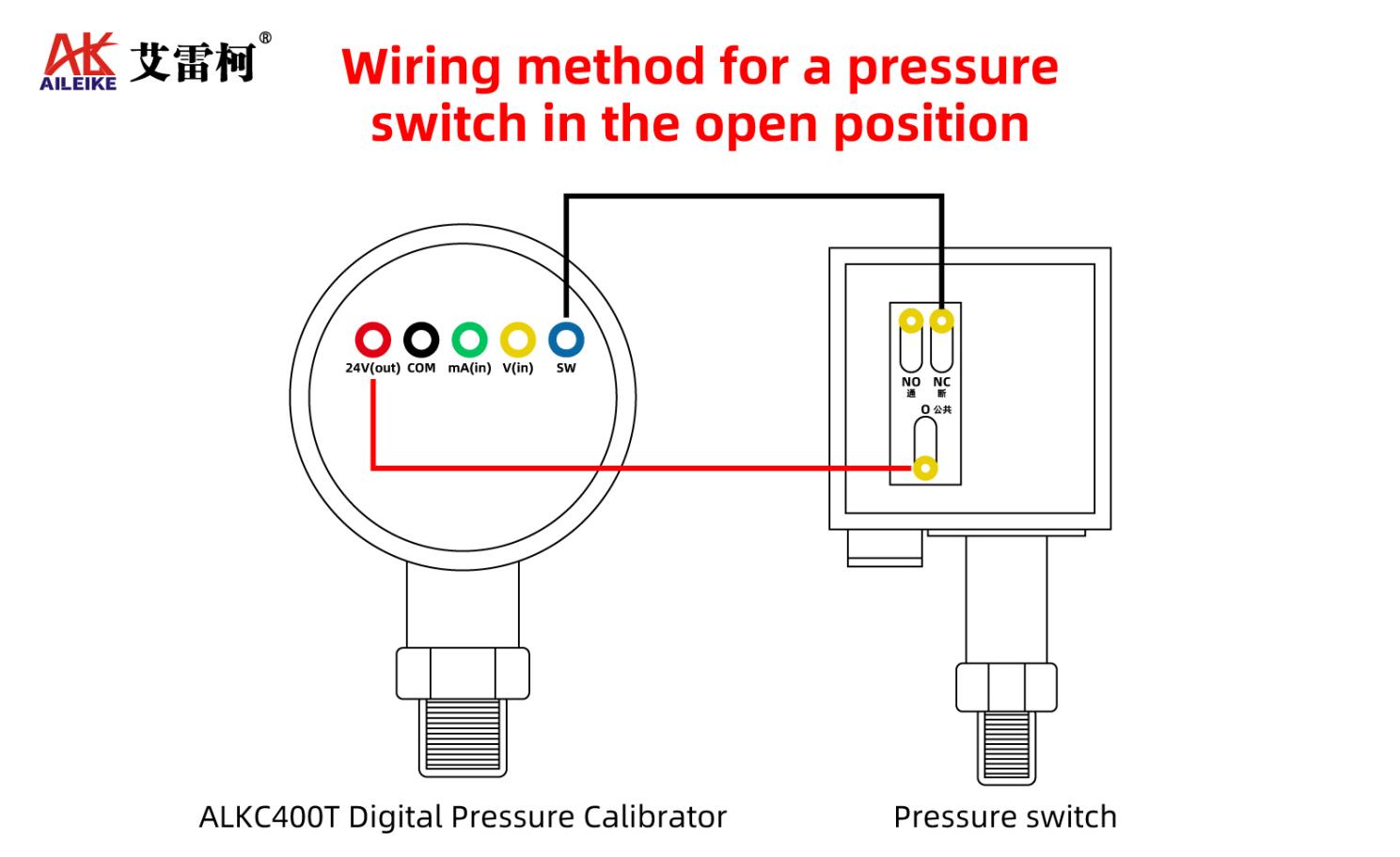
• Wiring instructions:
(1) Connect the ALKC400T red test pen to the 24V output interface of the standard meter, and connect the black test pen to the pressure switch measurement interface.
(2) The other end of the red alligator clip is connected to the pressure switch common terminal (COM), while the black alligator clip is connected to the normally open/break (NC) or normally closed/make (NO) terminal.
(3) Now, first clamp the black alligator clip to the normally open (NC) terminal. At this point, if the standard ALKC400T pressure switch displays the "-/-" symbol, it indicates that the pressure switch is functioning properly in its normally open (disconnected) state, and the wiring is correct.
(II) Operation process
Core setting steps: Set the pressure to 2MPa according to the target, rotate the pressure switch adjustment knob slightly (clockwise for increasing pressure, counterclockwise for decreasing pressure), and cooperate with the calibration bench to perform pressure debugging. Accurately set the pressure switch action value to the target pressure of 2MPa, and keep the knob position fixed after the setting is completed.
1. Inspection process of closing and disconnecting the pressure switch when it is in the normally open state
• First, open the ALKT700 vent valve, adjust the fine adjustment knob counterclockwise to the appropriate position (middle position), and then close the vent valve.
• Use a lever to apply pressure, stopping when the pressure reaches around the verification value. Then, use fine adjustment to turn clockwise to the desired upper cut-off value (action value) of 2MPa for switch closure. Upon hearing the "tick" sound from the instrument buzzer, the contact state will change, and the standard gauge interface will transition from "-/-" to "--" symbols. The pressure switch will switch from an open state to a closed state, and the action pressure value should be recorded.
• Continue to use fine adjustment to decrease the pressure counterclockwise until it reaches the lower cut-off value (reset value) of 1.9 MPa. You will still hear the "tick" sound indicating the instrument beeps, the contact state will change, the standard gauge interface will transition from "--" back to "-/-" symbols, and the pressure switch will switch from a closed state to an open state. Record the reset pressure value.
• After the inspection is completed, open the vent valve, gradually release the pressure inside the pipeline, and when the pressure is released to 0, the measurement is complete.
2. Inspection process of closing and opening of pressure switch under normally closed state
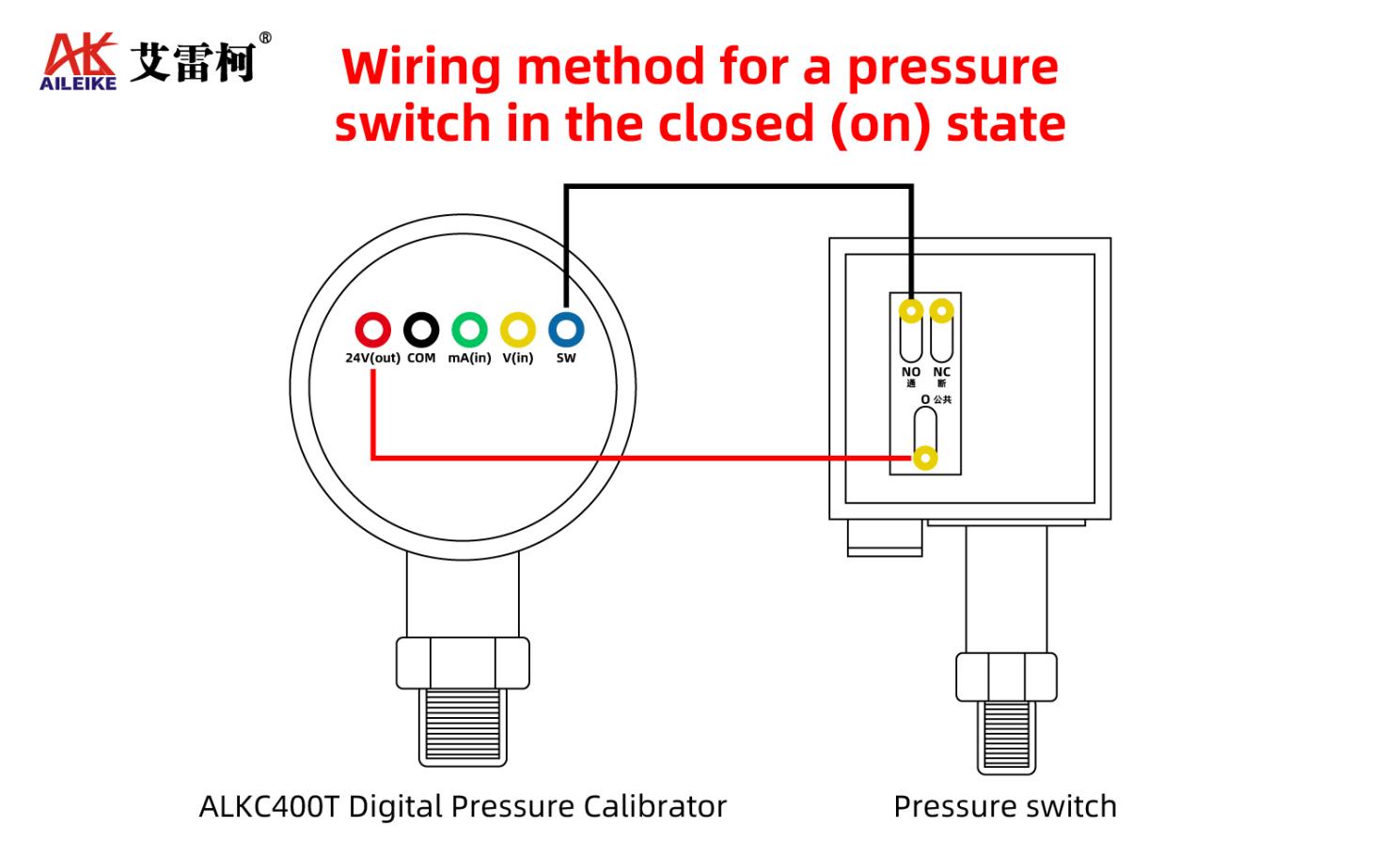
First, clip the black alligator clip onto the normally closed terminal (NO). Then, you can see that the pressure switch is in the normally closed state, and the standard ALKC400T pressure switch displays the "--" closed symbol.
• First, open the bleeder valve, turn the fine adjustment knob counterclockwise to the appropriate position (middle position), and then close the bleeder valve.
• Apply pressure using a lever, stopping when the pressure reaches the verification value. Then, use fine adjustment to turn clockwise to the desired upper cut-off value (action value) of 2MPa for switch disconnection. Upon hearing the "tick" sound from the instrument buzzer, the contact state will change, and the standard gauge interface will transition from "--" to "-/-" symbols. The pressure switch will switch from a closed state to an open state. Record the action pressure value.
• Continue to use fine adjustment to decrease the pressure counterclockwise until it reaches the lower cut-off value (reset value) of 1.9 MPa. You will still hear the "tick" sound indicating the instrument beep prompt, the contact state will change, the standard gauge interface will transition from "-/-" to "--" symbols, and the pressure switch will return from the disconnected state to the connected state. Record the reset pressure value.
• After the inspection is completed, open the vent valve and gradually release the pressure inside the pipeline until it reaches 0. The measurement is now complete.
III. Precautions
Standardized use
• Operations should follow standard procedures. The ALKT700 pressure calibration bench should be pressurized and depressurized slowly to avoid pressure shock.
• The wiring of the Precision digital pressure gauge alkc400T must be clear to strictly prevent reverse wiring.
• The readings at the verification points should be taken after the values on the standard meter have stabilized, and the records should be kept accurate and real-time.
• After the inspection is completed, slowly release the pressure to zero and ensure there is no residual pressure before removing the instrument being inspected.
Maintenance and calibration cycle
• Regularly conduct metrological verification on the ALKC400T precision digital pressure gauge (it is recommended to do so once a year) to ensure that the measurement accuracy meets the required standards.
• When the pressure gauge is not in use, the power should be turned off. If it is not used for a long time, it should be charged once every three months.
• If the air pressure table is not to be used for a long period, it should be depressurized and stored, covered with a cloth to prevent dust from entering the instrument.
IV. Conclusion
The standardized calibration of pressure switches is fundamental to the stable operation of industrial measurement and control systems. In this task, the ALKT700 pressure calibration bench is used as the standard measuring instrument, paired with the ALKC400T precision digital pressure gauge. Strict adherence to standard procedures ensures precise setting of equipment action thresholds, resetting of return differences, and testing of contact continuity. The closing and opening actions of the pressure switch are standardized. Moving forward, this procedure will be strictly implemented, with regular calibration work carried out and equipment maintenance conducted to ensure accurate calibration data.
Related News