

Understand in One Article | Operating Procedures and Applicable Scenarios of the AILEIKE ALKB9802 Portable Hydraulic Pump
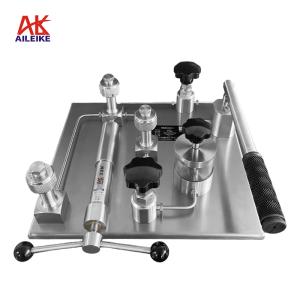
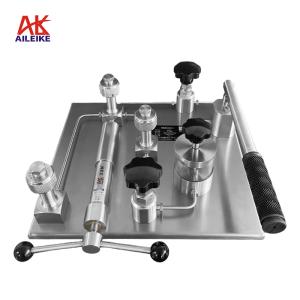
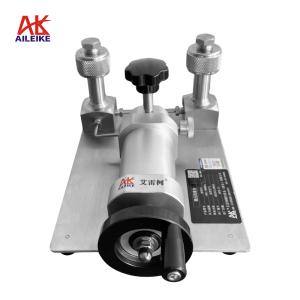
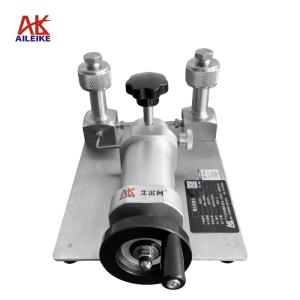
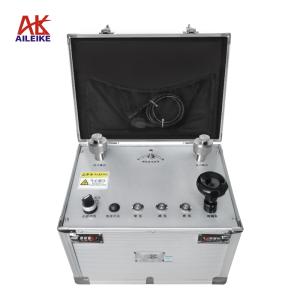
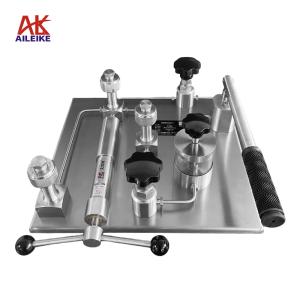
ALKB9802 is a portable hydraulic pump from AILEIKE, characterized by its portability, ease of carrying, and simple operation. It meets the needs of both laboratory precision calibration and industrial field operations. It can be used in conjunction with various pressure instruments such as digital pressure gauges, pressure transmitters, and pressure switches to complete verification, calibration, and debugging tasks. It is a commonly used calibration tool for metrological verification, factory maintenance, and on-site emergency repairs.
1. Technical indicators
|
name |
Portable hydraulic pump |
Pressurization method |
manual |
|
model |
ALKB9802 |
medium |
Purified water/Calibration oil |
|
pressure range |
0~60MPa |
Overall dimensions |
395×215×155mm |
|
Adjust fineness |
0.1kPa |
weight |
3.9kg |
|
Output port |
2 pieces |
Pressure connection |
Quick-connect thread (M20*1.5) |
II. Operating Method
First, unscrew the knob on the injection port of the ALKB9802 portable hydraulic pump, and use a syringe to inject the medium into the reservoir cup. Ensure that enough medium is injected (at least two-thirds of the cup).
• Next, discharge the excess gas from the hydraulic pump. First, unscrew the plugs from the two output ports, then open the stop valve (by turning it once), adjust the fine adjustment valve counterclockwise until it stops, and close the pressure relief valve. Next, use the pressure rod to apply pressure, allowing the pilot pressure to reach the two output ports. After the excess gas is discharged, seal the verified pressure gauge of the standard gauge to the ALKB9802 output port.
Pressure gauge calibration process
1. Voltage boosting process
Use the pressure rod to gradually increase the pressure, stopping when it reaches approximately 5~10MPa. Close the stop valve, and then use the fine adjustment valve to increase the pressure clockwise to the verification point.
2. Decompression process
Directly use the trim valve to reduce pressure counterclockwise, until it reaches the verification point.
3. Pressure relief process
Open the pressure relief valve and the stop valve in sequence, gradually releasing the pressure inside the pipeline until it reaches 0. The measurement is complete.
III. Application Scenarios
1. On-site maintenance and calibration: The machine is lightweight and can be brought to factories or construction sites for on-site calibration of various high-pressure instruments.
2. Metrology Laboratory: The metrology room and quality inspection department conduct pressure gauge verification, using standard digital pressure gauges for pressure calibration.
3. Factory inspection of instrument factory: pressure gauge production workshop, product factory pressure testing.
4. Scientific research institutes and university laboratories: providing stable and controllable hydraulic pressure sources for fluid mechanics and high-pressure experiments.
5. Instrument maintenance and debugging: In the pressure instrument maintenance workshop, complete the pressure calibration test for the repaired instruments.
IV. Precautions
1. The instrument should be used within the rated pressure range as much as possible, and overrange use is prohibited.
2. When transportation or carrying for use is required, the exhaust knob must be locked tightly, the hand pressure lever placed in a flat position, and the pump screw rod fully screwed in for fine adjustment.
3. When applying pressure, loosen the output stop valve by half a turn only. Do not loosen it too much, as excessive pressure may damage the hard sealing ring.
4. During machine operation, the exhaust knob should be kept in the released and open state.
5. If not in use for a long period, connect the liquid-conducting hose to drain the liquid (water medium) from the liquid storage cup (even if not in use for a short period, the liquid should be drained).
6. If the pressure medium is contaminated, please replace it promptly.
7. After selecting the medium (oil or water), it cannot be changed later.
V. Conclusion
The AILEIKE ALKB9802 portable hydraulic pump, with its lightweight body, stable pressure maintenance, and wide range of applicable scenarios, has overcome the pain points of traditional hydraulic pumps, such as bulky size. The device is easy to operate and can meet the high-precision requirements of precise pressure calibration in laboratories, while also adapting to the portable operation needs of complex working conditions in industrial sites, shipyards, and the wild.
Related News