

A Comprehensive Operational Guide to the Full Process of Accurate Calibration, Testing and Measurement of Pressure Gauges
A Comprehensive Operational Guide to the Full Process of Accurate Calibration, Testing and Measurement of Pressure Gauges
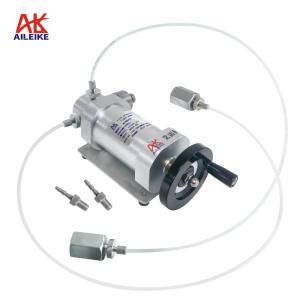
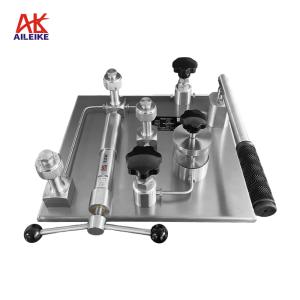
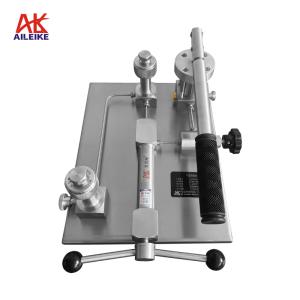
Pressure gauges are the core measuring instruments for pressure monitoring in industrial settings; the accuracy of their readings is directly linked to production stability, data reliability and standardised traceability of measurement values, making it essential to carry out compliant calibration and testing of pressure gauges. This pressure gauge calibration exercise strictly adhered to current metrological technical specifications, util ising calibration tools such as the ALKB9602 portable air pump and the ALKC400D precision digital pressure gauge, to carry out precise measurements of both positive and negative pressures and performance testing throughout the entire process on the Y-100BF stainless steel pressure gauge. This was complemented by gentle tapping of the case to eliminate mechanical errors, with each calibration step strictly controlled to ensure the accuracy of the test data and the compliance of the calibration results, thereby comprehensively verifying the metrological performance of the pressure gauge under test.
I. Pressure Gauge Calibration Tools
|
Name |
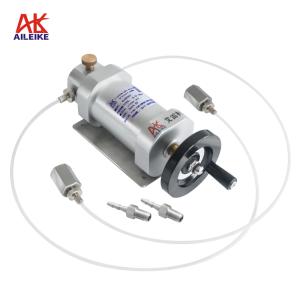
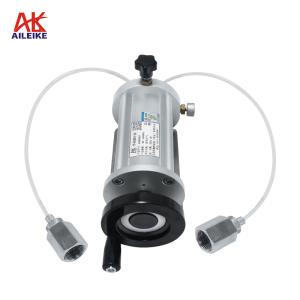
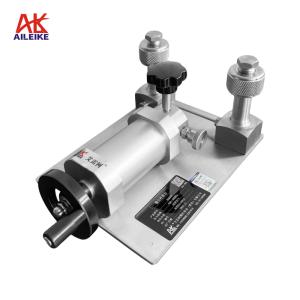
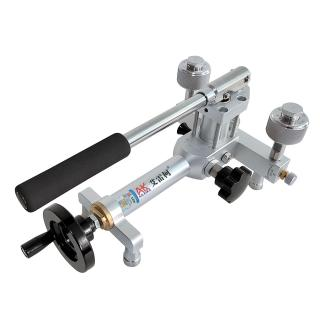
Portable air pump |
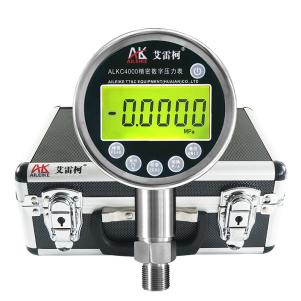
Precision Digital Pressure Gauge |
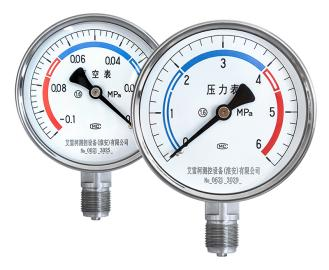
Stainless steel pressure gauge |
|
Model |
ALKB9602 |
ALKC400D |
Y-100BF |
|
Technical Specifications |
Pressurisation method: Manual Pressure range: -0.095 to 6 MPa Medium: Clean air Outlets: 2 Connection: M20×1.5(F) Net weight: 3.2 kg Product dimensions: 320 × 200 × 160 mm |
Pressure: -0.1 to 6 MPa Accuracy: Class 0.05 Temperature compensation: With temperature compensation Power supply: Built-in rechargeable battery Connection: M20×1.5 (M) Net weight: 0.6 kg Dimensions: 110×50×185 mm |
Pressure: -0.1 to 0 MPa / 0 to 6 MPa Accuracy: Class 1.6 Material: Stainless steel Dial diameter: φ100 mm Connection: M20×1.5 (M) Net weight: 0.35 kg Product dimensions: 100 × 42 × 140 mm |
|
Product Dimensions |
|
|
|
The entire verification process must be carried out in strict accordance with current metrological technical specifications. The main references include:JJG52-2013 ‘General Pressure Gauges, Pressure-Vacuum Gauges and Vacuum Gauges with Elastic Elements’, which applies to the initial verification, periodic verification and in-service inspections of general pressure gauges, pressure-vacuum gauges and vacuum gauges with elastic elements, and covers on-site indicating pressure measuring instruments commonly used in industry.
II. Detailed Explanation of the Operational Process
(1) Preliminary Preparations
1. Environmental Requirements
The temperature must be maintained at (20±2) °C, with relative humidity ≤ 85% RH and no condensation. The site must be free from vibration, dust and corrosive gases.
2. Connecting the equipment
Connect the standard gauge ALKC400D and the pressure gauge under test, Y-100BF, to the outlet of the ALKB9602, ensuring a sealed connection.
(2) The process of calibrating a pressure gauge against atmospheric pressure
1. Pressure-building procedure
• First, open the shut-off valve on the ALKB9602 by turning it anticlockwise one full turn, then turn the fine-adjustment valve anticlockwise until it stops. Next, push the positive/negative pressure switch valve inwards and close the relief valve.
• Apply pressure using the pressure-application rod, stopping at approximately 0.9 MPa. Then, using the fine-adjustment valve, slowly turn it clockwise to the calibration point of 1 MPa. Once the pressure has stabilised and the standard reading no longer fluctuates, check the pressure reading on the pressure gauge under test. Gently tap the side of the pressure gauge’s casing with your finger (under no circumstances should you tap the glass or strike it forcefully), observe the position of the pointer, and record the reading once it has stabilised after tapping. Use the reading after tapping as the actual calibration reading for that pressure point, and calculate the error.
• Next, use the pressure rod to increase the pressure to approximately 1.9 MPa and 2.9 MPa, then stop. Use the fine-adjustment valve to slowly turn clockwise to the calibration points of 2 MPa and 3 MPa. Once the pressure has stabilised, tap the pressure gauge under test and record the value.
• Before adjusting to the next calibration point, first close the shut-off valve, then use the fine-adjustment valve to slowly turn the pressure clockwise to the 4 MPa calibration point. Once the pressure has stabilised, tap the pressure gauge under test and record the reading.
• Finally, use the fine-adjustment valve to slowly turn the pressure clockwise directly to the 5 MPa and 6 MPa calibration points. Once the pressure has stabilised, tap the pressure gauge under test and record the readings.
2. Pressure Reduction Procedure
• First, slowly open the relief valve and reduce the pressure to approximately 5.1 MPa, then stop. Close the relief valve and use the fine-adjustment valve to slowly turn the pressure counter-clockwise to the test point of 5 MPa. Once the pressure has stabilised, tap the pressure gauge under test and record the reading.
• Repeat the same procedure to set the pressure to the calibration points of 4 MPa, 3 MPa, 2 MPa and 1 MPa. Observe the pressure reading on the pressure gauge under test, tap the gauge, and record the reading once it has stabilised after tapping.
3. Pressure Relief Procedure
Open the pressure relief valve and the shut-off valve in sequence to gradually release the pressure within the pipeline. Once the pressure has been relieved to 0, the test is complete.
(3) The vacuum calibration process for pressure gauges
1. Pressure-building procedure
• First, remove the pressure gauge under test for measuring positive pressure and fit the one for measuring negative pressure. Pull the positive/negative pressure changeover valve outwards (do not switch under pressure). Next, open the shut-off valve by turning it anticlockwise one full turn, then turn the ALKB9602 fine-adjustment valve clockwise until it stops. Close the pressure relief valve.
• Use the pressure-application rod to create a vacuum, stopping when the pressure reaches approximately the calibration value. Use the fine-adjustment valve to slowly turn the pressure anticlockwise to the calibration point of –0.02 MPa. Once the pressure has stabilised, tap the pressure gauge under test and record the reading.
• Repeat the same procedure to adjust to the calibration points of –0.04 MPa, –0.06 MPa, –0.08 MPa and –0.095 MPa. Observe the pressure reading on the pressure gauge under test, tap the gauge, and record the reading once it has stabilised after tapping.
2. Pressure Reduction Process
• First, slowly open the relief valve to reduce the pressure to approximately the calibration value, then stop. Close the relief valve and use the fine-adjustment valve to slowly turn clockwise to the calibration point of –0.08 MPa. Once the pressure has stabilised, tap the pressure gauge under test and record the reading.
• Repeat the same procedure to adjust to the calibration points of –0.06 MPa, –0.04 MPa and –0.02 MPa. Observe the pressure reading on the pressure gauge under test, tap the gauge, and record the reading once it has stabilised.
3. Depressurisation procedure
Open the relief valve and gradually release the pressure in the pipeline until it reaches 0. The measurement is then complete.
III. Points to Note
Proper Use
• Operations must be carried out in accordance with standard procedures. When pressurising or depressurising the ALKB9602 portable air pump, do so gradually to avoid pressure surges.
• Pressurise to the calibration point and record the reading once the standard gauge has stabilised; for the pressure gauge under test, once the pressure has stabilised, tap the case gently and take the reading immediately after tapping to ensure accuracy.
• Upon completion of the test, first slowly depressurise to zero; only when there is no residual pressure should the instrument under test be removed.
Maintenance and Calibration Intervals
• The ALKC400D precision digital pressure gauge should undergo periodic metrological verification (recommended once a year) to ensure measurement accuracy meets standards.
• When the pressure gauge is not in use, switch off the power supply; if it is not used for an extended period, recharge the battery once every three months.
• If the air pump is not to be used for an extended period, depressurise it before storage and cover it with a cloth cover to prevent dust from entering the instrument.
IV. Conclusion
During this pressure gauge calibration process, we strictly adhered to environmental requirements and followed standard operating procedures. We precisely controlled the calibration points during pressurisation and depressurisation, and eliminated mechanical errors by gently tapping the gauge case, thereby ensuring that the test data for each calibration point was accurate and reliable. This calibration comprehensively verified the metrological performance of the pressure gauges under test, effectively safeguarding the accuracy of their readings, and laid a solid foundation for their proper use and regular maintenance in the future.